


-
Gastein Valley
-
Ski & Mountain
-
Health & thermal spas
-
Experiences & Events
-
Service
-
My Gastein experience



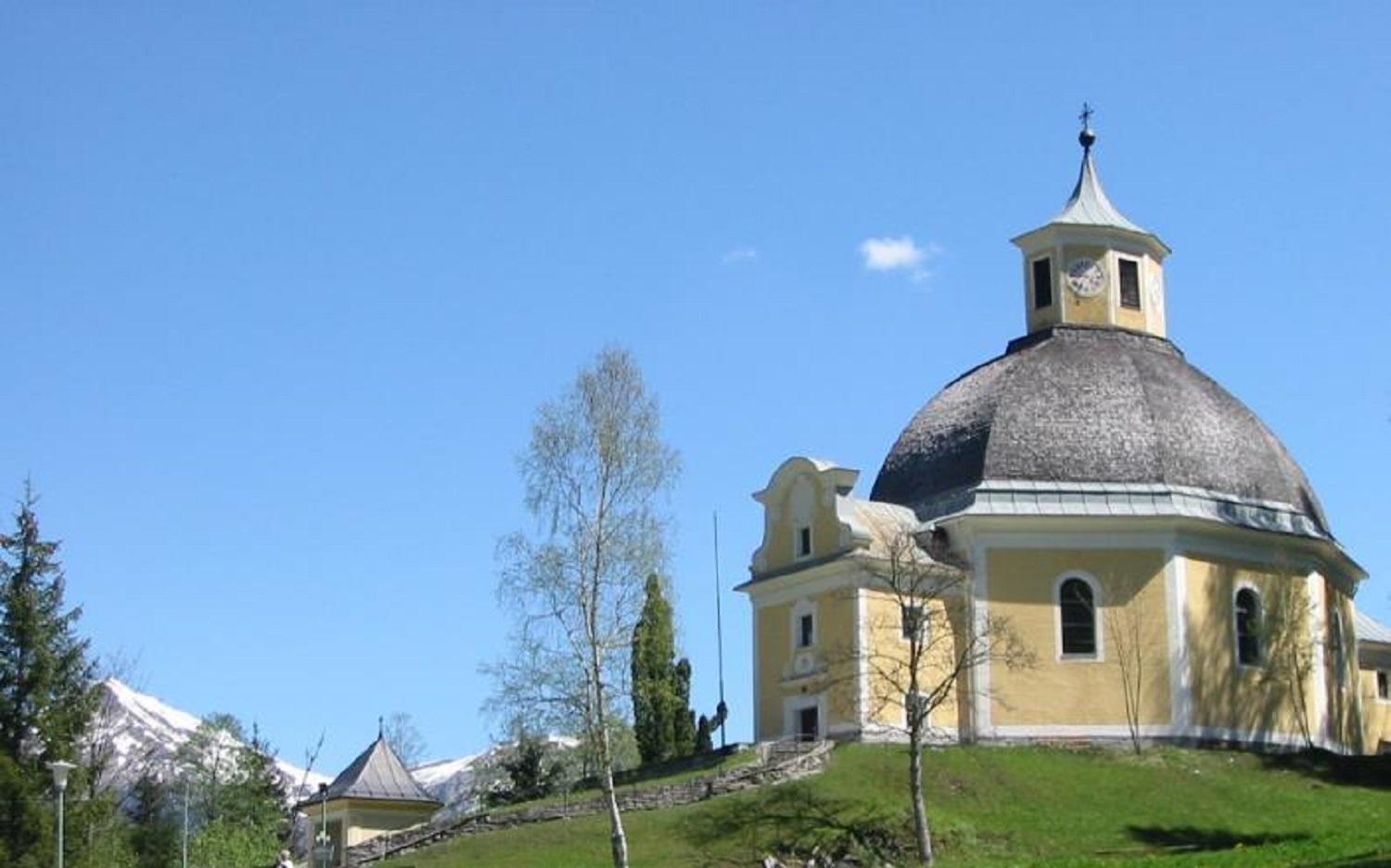
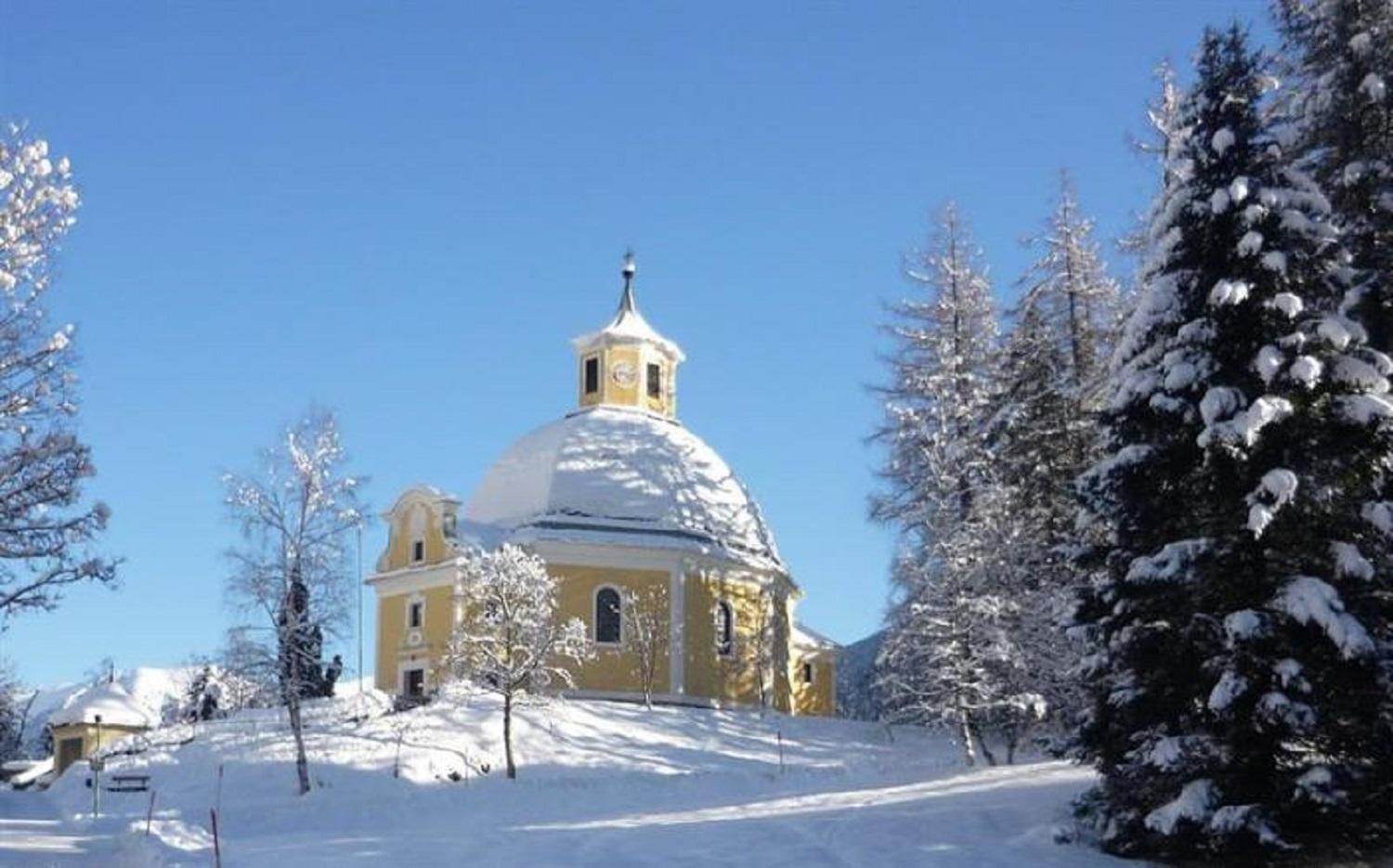
Pilgrimage church "Maria, Mutter vom Guten Rat"
Topics: Summer | Autumn | Winter | Hiking | Nordic walking | Cross country skiing | Family | Wedding | Romantic stay | Culture | Event | Concert
Bad Gastein
The parish and pilgrimage church "Mary, Mother of Good Counsel" in Böckstein
A baroque gem in Old Böckstein!
At the southern end of the valley, on a picturesque hill in the miners' settlement of Altböckstein, lies the parish and pilgrimage church "Maria, Mutter vom Guten Rat."
The construction of a church became relevant when the miners requested their own house of worship along with a pastor from Archbishop Sigismund Christoph Count of Schrattenbach (reg. 1753-1771). The Prince Archbishop himself purchased the necessary land and provided sustainable financial support for the church construction.
In 1764, the foundation stone could be laid. By 1765, the building was already vaulted, provided with a roof, and decorated inside. By Pentecost 1766, the interior furnishings were also completed. On July 26, 1767, the house of worship was solemnly consecrated by the Prince Archbishop in honor of Mary, the Mother of Good Counsel.
In the years following the consecration of the church, Schrattenbach had various precious furnishings (chalice, vestment, monstrance) provided.
The Building
The plans for the picturesque little church were created by Wolfgang Hagenauer, the High Prince's building manager. The construction was carried out by the master mason Christian Glaner, who came from Werfen. From the outside, the house of worship presents itself as a long, octagonal structure, but it is designed oval-shaped on the inside. Above the dome-shaped roof, there is a small clock and bell tower with a swinging spire. To the east is the two-story sacristy, to the west the entrance hall, on whose curved gable the coat of arms of the Prince Archbishop is mounted.
The interior of the church is divided into eight niches with large windows. The niches at the diagonals are equipped with galleries. The rear niche in the west is open to the organ gallery. The wall sections in between are framed by flat pilasters with simple leaf stucco in the capital area.
The Frescoes
The impressive fresco in the dome of the church was created by the Augsburg painter Johann Weiß and depicts the legend of the miraculous image from Genazzano. Angels carry the painting, accompanied by dancing putti, into the house of worship in Genazzano. At the steps to the sanctuary, pilgrims, cripples, the lame, and others in need of help sit or stand. In the right part of the fresco, a mountain with tunnels and kneeling miners with raised and clasped hands follow. On the left, Weiß painted an oriental landscape with pyramids, dome buildings, and obelisks as a reference to the original origin of the miraculous image. The western section shows an old and a young pilgrim in an unusual entanglement before a seascape.
The High Altar
The high altar was created in 1765/66 by the architect's brother, Johann Baptist Hagenauer.
The side vases contain a pillar of fire and a cloud, which refer to the signs of God's presence during the Israelites' exodus from Egypt (Ex 13:21). According to legend, the pillar of fire and cloud were visible during the transfer of the miraculous image across the sea.
On the sarcophagus-like mensa stands the simple, tempietto-shaped tabernacle. Originally, four late Baroque statuettes of the four Latin Church Fathers were also placed on it.
In the central round-arched niche of the white-gold retable, two large classical angels hold the oval miraculous image painted by Rosa Hagenauer, which is surrounded by a radiant halo. The framing pilasters support a flat beam. Above shines, between inverted broken gable segments, surrounded by clouds and cherub heads, the name of Mary in golden letters among the rays of the sun.
The Pulpit
Also by Johann Baptist Hagenauer is the semi-circular pulpit, whose basket, back wall, door, and soundboard are articulated by pilasters, leaf rows, and floral festoons.
The medallions of the basket depict the three divine virtues - faith, hope, and love - with their symbols. The Holy Spirit dove in the mirror of the soundboard indicates the divine origin of the Word of God. On the edge of the cornice, one finds the four symbols of the evangelists (angel - Matthew; lion - Mark; ox - Luke; eagle - John). The soundboard features a globe dominated by the tablets of the law.
The Side Altars
In 1776, the Rauris carpenter Leopold Hacksteiner delivered the side altars. Since they did not correspond to the overall appearance, they were likely significantly altered in the 19th century to match the Neo-Baroque furnishings. The simple paintings were created by an unnamed artist and depict legendary episodes from the life of Mary (on the left, the Assumption of Mary into the Temple in Jerusalem; on the right, the marriage to Joseph).
Figures and Paintings
The high-quality Stations of the Cross from the 4th quarter of the 18th century, the large crucifix by Kaspar Bichler (1850), two small paintings of the mining patrons Barbara and Nicholas by Sebastian Stief (1882), and the organ with its Neo-Baroque casing by Matthäus Mauracher (1895) along with the baptismal font made of Untersberger marble installed in 2007 perfectly integrate into the interior of the house of worship.
The church can only be entered during mass. Holy Mass every Sunday at 10.00 am.
Individual visits are not possible.
Inquiries for guided tours should be directed to the following email address: pfarre.badgastein@pfarre.kirchen.net
Opening Hours
Wednesday (heute)
closed
Thursday
closed
Friday
closed
Saturday
closed
Sunday
10:00 - 12:00
Monday
closed
Tuesday
closed
Holy mass - Sundays at 10 am
Links
Addresses
Wallfahrtskirche "Maria vom guten Rat"
Altböckstein
5645 Böckstein, AT
5645 Böckstein, AT